
Your visibility is shifting beyond traditional search results as homeowners increasingly rely on large language models like ChatGPT and Perplexity for immediate answers and service recommendations.
This guide demystifies Generative Engine Optimization, detailing the mechanics of how these AI platforms discover, index, and cite your website content, which is the new frontier for contractor leads.
You will learn precise content structuring techniques—such as adopting an ‘answer-first’ approach—and the essential Schema markup required to ensure your expertise is accurately parsed, moving beyond simple SEO to direct AI citation.
We cover how to build the requisite authority signals that LLMs trust, how to test your content against natural language prompts, and the critical tracking methods needed to monitor your brand’s accuracy within these powerful new search environments.
Adopt these strategic methods now to ensure your company is the trusted source AI directs users toward.
How LLMs Discover and Cite Web Content
The Role of Search Indexes (Bing and Beyond)
LLMs do not "search" the live web in the same way a traditional browser does; instead, they rely on complex integrations with existing search indexes. For ChatGPT, the backbone of its web discovery is Microsoft Bing.
When a user asks a query related to (https://www.example.com/home-services-marketing-seo/), ChatGPT uses its browsing tool to query the Bing index, retrieve relevant snippets of information, and synthesize an answer. Unlike ChatGPT’s selective browsing, Perplexity AI operates as a "discovery engine" that prioritizes real-time crawling to provide up-to-the-minute answers.
Perplexity follows a distinct multi-step discovery process:
- Query Decomposition: Breaking down the user’s intent into multiple search strings.
- Parallel Indexing: Searching across Bing, Google, and its own internal crawlers simultaneously.
- Content Parsing: High-speed scraping of the top-ranking pages to extract data blocks.
- Attribution: Mapping specific facts back to the original source URL for citation.
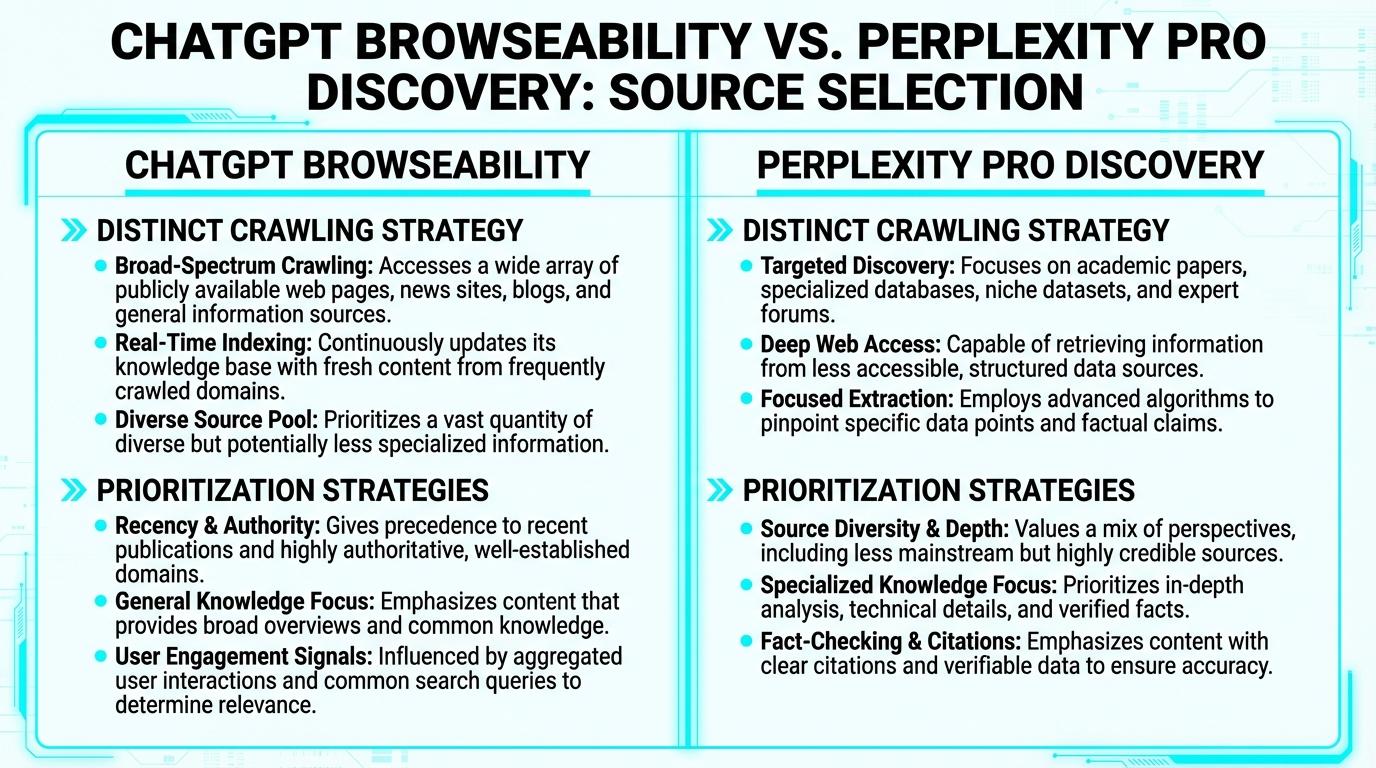
| Feature | ChatGPT (via Bing) | Perplexity Pro Discovery |
| :— | :— | :— |
| Primary Data Source | Bing Search Index | Bing, Google, and Proprietary Crawlers |
| Discovery Logic | Search-based browsing tool | Direct live-web crawling |
| Update Frequency | Index dependent | Near real-time |
| Citation Method | Inline links and "Sources" dropdown | Numbered footnotes and source cards |
Speed of Discovery and Citation
The timeline for appearing in LLM citations is fundamentally tied to how quickly your content is indexed by traditional search engines. While Google remains the leader for organic traffic, Bing’s index is the primary gateway for many AI-driven responses.
To ensure your home service website is indexed and ready for AI retrieval, you must follow the technical requirements outlined in the (https://www.bing.com/webmasters/help/webmaster-guidelines-30f4c139). Proper site maps and high-quality schema markup are no longer just for SEO; they are the "instruction manuals" that tell LLMs exactly what your business provides.
There is often a significant crossover effect between search engines. When a page is indexed and begins to rank on the first page of Bing, it typically appears as a primary citation in Perplexity and ChatGPT within 24 to 48 hours. This rapid discovery makes technical health a high priority for any contractor looking to lead in the AI era.
Structuring Content for Maximum AI Readability
Formatting for LLM Extraction
TL;DR: How to Structure for AI
- Core Answer: Place the direct answer to the user’s query in the first 50–100 words of the section.
- Key Strategy: Use clear HTML hierarchy (H1-H3) and bulleted lists to eliminate parsing ambiguity.
- Action Item: Ensure all technical data is presented in a table format for easier extraction by LLM scrapers.
To rank in ChatGPT and Perplexity, your content must be easily digestible for automated crawlers. These LLMs use sophisticated parsers to determine the relevance and authority of a page. If your site structure is messy, the AI may fail to associate your "home service solutions" with the user’s specific problem.
Establishing a clear information hierarchy is the first step in successful Answer Engine Optimization. Follow these hierarchy best practices to ensure AI agents can map your content effectively:
- H1: The Primary Topic – This should be your main target keyword (e.g., "How to Rank in ChatGPT and Perplexity"). Use only one H1 per page.
- H2: Major Categories – Use these to define the "pillars" of your answer, such as "Technical SEO" or "Content Structure."
- H3: Specific Tactical Details – Use these for sub-steps, specific tips, or definitions that support the H2 section.
Using bulleted and numbered lists further assists LLMs by signaling a collection of related, high-priority items. This prevents the "wall of text" effect that often leads to AI hallucination or total omission from a search result.
The ‘Answer-First’ Paragraph Strategy
Ranking in generative engines requires a shift from traditional storytelling to an "Answer-First" approach. When a user asks Perplexity a question, the engine looks for the most concise, accurate snippet it can find to cite. If your conclusion is buried at the bottom of a 2,000-word guide, the AI is likely to skip over it in favor of a competitor who provides the solution upfront.
This strategy is deeply tied to how Retrieval-Augmented Generation (RAG) works. In a RAG-based system, the AI retrieves relevant documents from its index and then synthesizes a response based on those snippets. When researchers are evaluating LLM citations and RAG systems, a primary metric is the "relevance" of the retrieved chunk. By leading your paragraphs with a bolded summary or a direct answer, you increase the likelihood that the RAG process selects your content as the "ground truth" for the generated response.
For home service businesses, this means starting a section on "AC repair costs" with a clear range or average price before diving into the nuances of labor and parts. This clarity makes your content the path of least resistance for the AI’s retrieval agent.
Utilizing Tables and Data Summaries
While prose is necessary for context, structured data tables are the "gold mine" for LLMs. ChatGPT and Perplexity excel at extracting specific data points from tables to create comparisons or summaries for the user. If you want to be the source of a comparison chart in a Perplexity answer, you must provide that chart yourself.
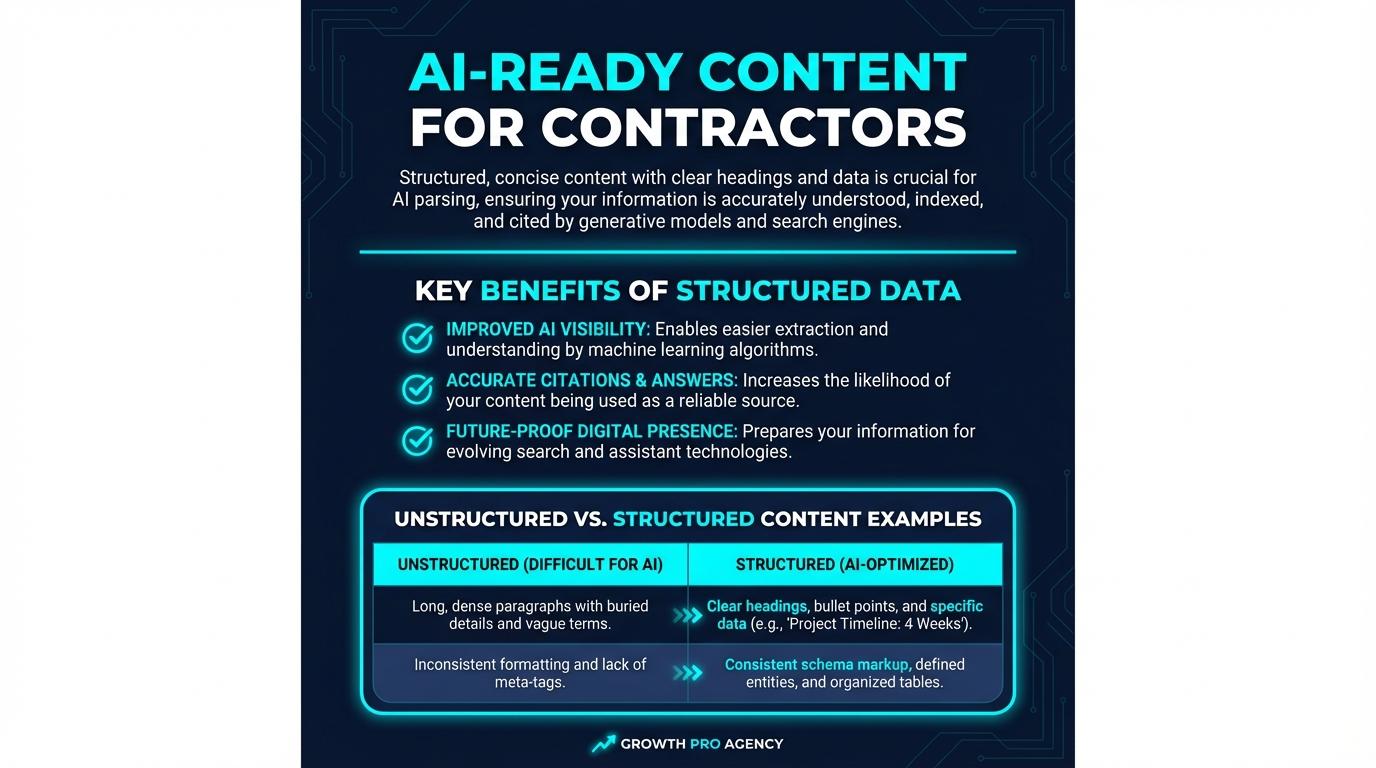
For contractors and home service providers, using tables to display service areas, pricing tiers, or warranty details is a high-impact GEO strategy for success. Beyond simple tables, ensure your technical markup (like Schema.org) is error-free. This provides a secondary layer of "machine-readable" metadata that confirms the information found in your tables, reducing the chance of the AI misinterpreting your data.
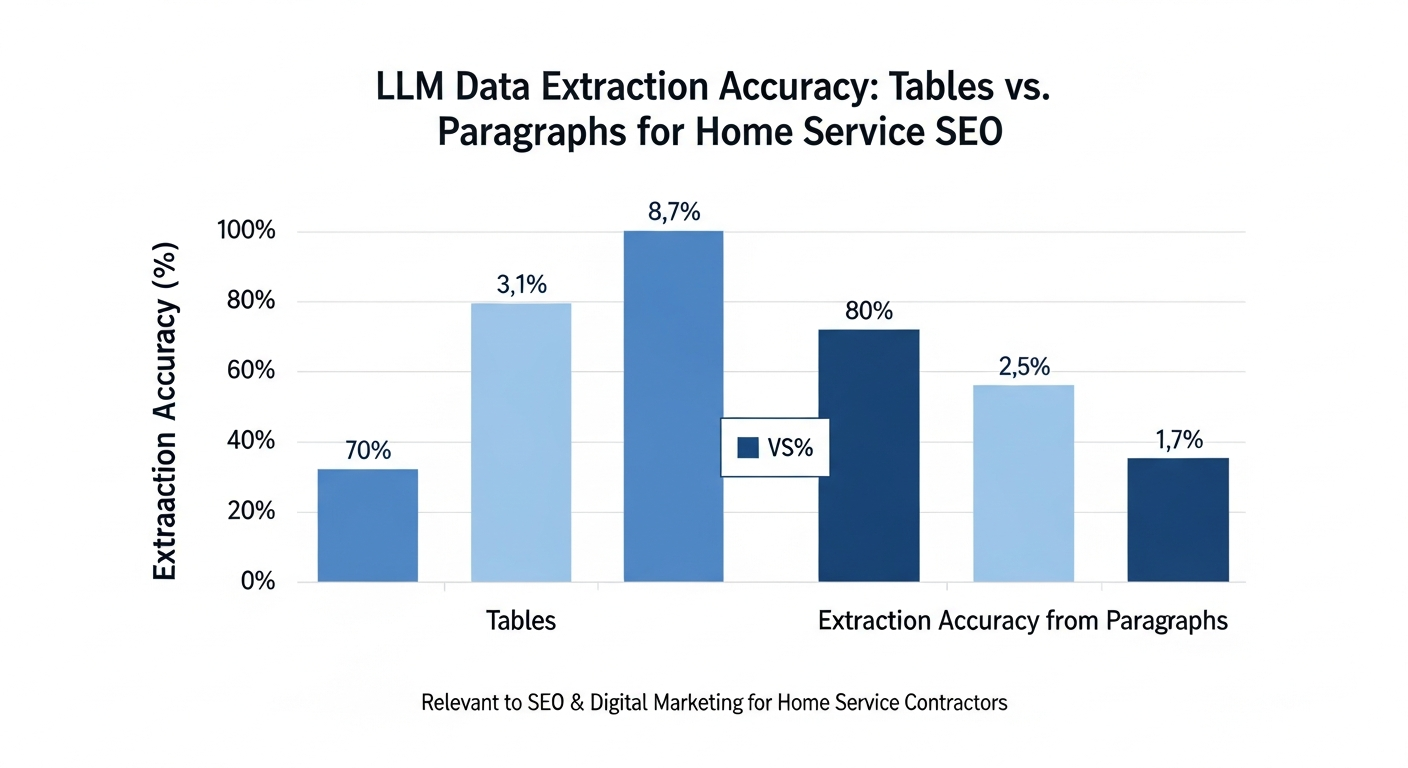
By combining a rigorous H-tag hierarchy, an answer-first editorial style, and data-rich tables, you transform your website from a collection of articles into a structured database that AI engines can trust and cite.
Technical AEO: Schema and Metadata Requirements
To rank in AI-driven search engines like Perplexity and ChatGPT, you must move beyond standard HTML. LLMs rely on structured data to build entity relationships and confirm facts. Without a robust technical foundation, AI crawlers may struggle to parse your service areas, pricing, or expertise, leading to omissions in AI-generated answers.
Use our AEO vs SEO guide to align this AI-search work with the traditional organic visibility your contractor site still needs.
Essential Schema Types for GEO
For home service contractors, Generative Engine Optimization (GEO) depends heavily on the implementation of specific schema types. These scripts act as a direct data feed to LLMs, reducing the "hallucination" risk by providing verified facts about your business.
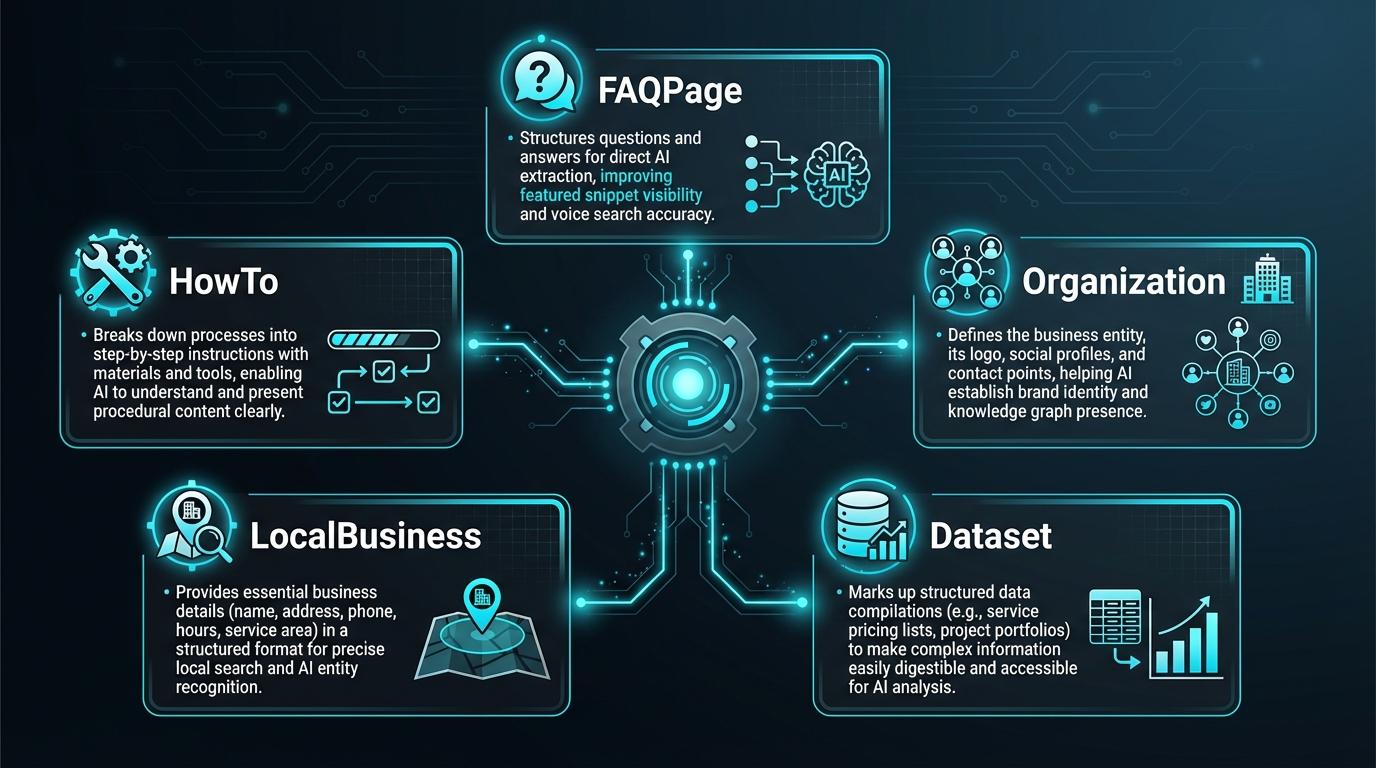
Top 5 Schema Types for Contractor AEO:
- LocalBusiness (or specialized types like RoofingContractor or HVACBusiness): Defines your physical location, service hours, and geographic service area.
- FAQPage: Provides clear question-and-answer pairs that Perplexity often uses to populate direct citations.
- HowTo: Breaks down complex tasks (e.g., "How to reset a circuit breaker") into steps that AI assistants can easily read aloud or summarize.
- Service: Clearly outlines individual offerings, helping LLMs distinguish between "emergency repair" and "routine maintenance."
- Review: Aggregates third-party social proof, which AI models use to calculate "sentiment" and "authority" scores.
Sitemaps and Indexing Feeds
While traditional XML sitemaps are still necessary for Google, LLMs and search bots like BingBot (which powers much of ChatGPT’s web search) prioritize speed. To ensure your latest project photos or blog updates are indexed immediately, you must utilize faster discovery mechanisms.
In addition to standard sitemaps, we recommend maintaining an RSS 2.0 or Atom feed. RSS feeds serve as a real-time notification system for LLMs, allowing them to discover and ingest new content significantly faster than standard crawling. For home service providers, this means your "Emergency Storm Damage" guide can be cited by AI tools the same day it is published.
Mobile UX and Technical Health
AI models do not just look at your text; they evaluate the technical health of the source to determine if it is "cite-worthy." Perplexity and ChatGPT prioritize sources that offer a seamless user experience, as these are viewed as more authoritative and reliable.
- Site Speed: High-latency pages are often skipped by aggressive AI crawlers. Improving Core Web Vitals ensures that when an LLM attempts to verify a fact on your site, it doesn’t timeout.
- Security (HTTPS): Non-secure sites are rarely used as citations in AI responses due to safety filters.
- Clean DOM Structure: Avoid "div soup." Use semantic HTML5 tags (like <article>, <section>, and <aside>) to help AI models understand the hierarchy of your content.

By aligning your technical infrastructure with these AEO requirements, you ensure that your business isn’t just "findable," but "readable" for the next generation of search.
Building Authority: E-E-A-T in the Age of AI Search
AI search engines like ChatGPT and Perplexity prioritize Experience, Expertise, Authoritativeness, and Trustworthiness (E-E-A-T) because they need to verify information before presenting it as fact. For home service businesses, this means moving beyond generic blog posts to demonstrate real-world competence.
Prioritizing Primary Sources and Original Data
Large Language Models (LLMs) crave unique datasets they cannot find in a standard scraping of the web. To rank, contractors must provide Project Case Studies with Before/After photos and job-site data as a primary ranking signal.
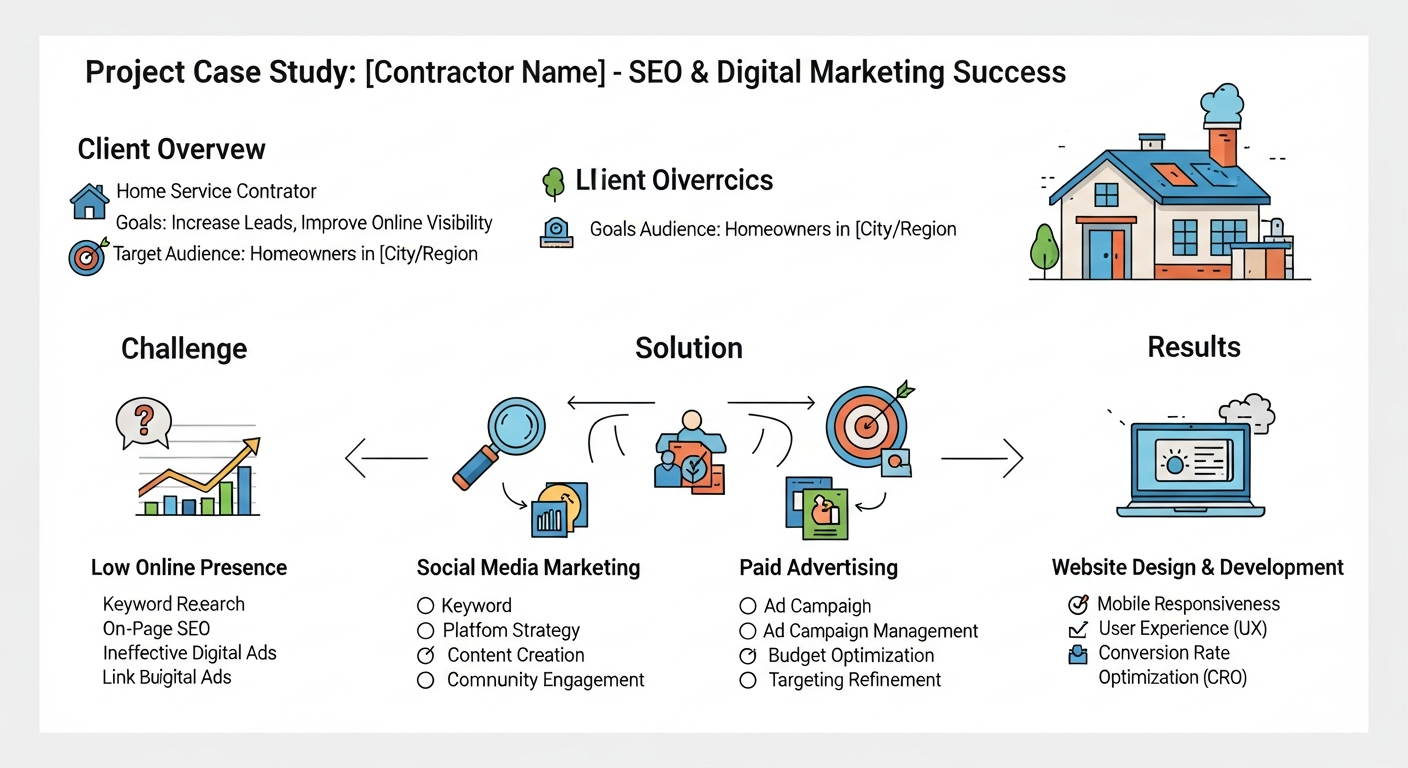
These case studies serve as "proof of work" that AI engines use to validate your local expertise. By documenting specific challenges, materials used, and job-site locations, you create a rich data environment. This helps AI identify your business as the most qualified contractor for specific services.
Strengthening Authoritative Signals
Your website must explicitly signal authority to both bots and users. This involves technical optimization like Schema Markup (LocalBusiness and Service types) to help AI parse your credentials. Ensure every page clearly states your licensing, years of experience, and service area.
On-page signals are only half the battle; off-page authority is equally vital. High-quality backlinks from trade publications and niche-specific directories reinforce your standing. These signals act as "votes of confidence" that AI models look for when determining who to suggest in conversational search results.
Brand Citations and Reputation
In the age of AI search, your brand reputation is evaluated through sentiment analysis. AI engines scan customer reviews on third-party platforms to determine if your business is reliable. Consistent, positive mentions across Google, Yelp, and industry-specific forums are crucial.
Reputation isn’t just about stars; it’s about the context of the conversation. When users ask ChatGPT for "the best electrician near me," the AI analyzes which companies are frequently cited with high praise. Focus on building a digital footprint that reflects a high-authority, trustworthy brand.
Optimizing for Conversational Queries and Natural Language
The shift from traditional search engines to AI-driven answer engines requires a fundamental change in how you approach keywords. While Google users often type fragmented phrases, users on ChatGPT and Perplexity engage in a dialogue. They provide context, set constraints, and ask complex questions that require your content to be structured for natural language processing (NLP).
Mapping User Intent in AI Chat
In the era of Answer Engine Optimization (AEO), ranking depends on how well your content matches the "prompt" rather than just the "keyword." Traditional SEO focuses on high-volume search terms, but AI optimization focuses on providing the definitive answer to specific, multi-layered queries.
| Search Type | Example Query | Intent & Context |
| :— | :— | :— |
| Traditional Keyword | "AC repair Dallas" | Broad intent; user is looking for a list of local service providers. |
| Natural Language Prompt | "Who is the most reliable emergency AC repair company in Dallas for weekend service?" | Specific intent; user requires social proof (reliability), niche availability (emergency/weekend), and local relevance. |
To capture these queries, your content must transition from "talking at" the user to "answering" the user. This means moving away from keyword stuffing and toward semantic relevance, where the AI understands that your business is the most logical solution for the specific problem described in the prompt.
Systematic Prompt Testing
To ensure your home service business remains the top recommendation, you must implement a systematic prompt testing workflow. This allows you to see exactly how LLMs perceive your brand compared to competitors.
- Identify Core Service Questions: Gather the top 10 questions your customers ask during initial phone calls or via contact forms.
- Draft Variations of Prompts: Create a test set that includes informational prompts ("How do I know if my furnace is broken?"), comparative prompts ("Who is better for roof repair in [City], Company A or Company B?"), and transactional prompts ("Find me the highest-rated plumber near me that offers 24/7 service").
- Audit AI Responses: Input these prompts into ChatGPT (GPT-4o), Perplexity AI, and Google Gemini.
- Analyze the "Why": If your business isn’t mentioned, look at the sources the AI cites. Are they citing Yelp, local news, or a competitor’s blog?
- Refine and Update: Update your website content to address the specific gaps identified during testing, ensuring you provide the data points the AI is currently missing.
Creating Prompt-Ready Snippets
AI models are trained to extract information efficiently. To help them "digest" your site, you should implement prompt-ready snippets. These are concise, high-value blocks of text designed to be pulled directly into an AI’s response.
One of the most effective ways to do this is through structured Q&A blocks. Instead of a hidden FAQ page, integrate common questions and direct answers into your main service pages. For example, a "Weekend AC Repair" section should explicitly state: "We provide emergency AC repair in Dallas every Saturday and Sunday from 8:00 AM to 10:00 PM."
Additionally, you must maintain active brand monitoring. Because Perplexity and ChatGPT pull from real-time data and review aggregates, your reputation on third-party sites acts as a "trust signal" for the AI. Consistent, positive mentions across the web ensure that when a user asks for the "most reliable" contractor, the AI has the evidence it needs to select your business.
How to Monitor and Track Brand Mentions in AI Answers
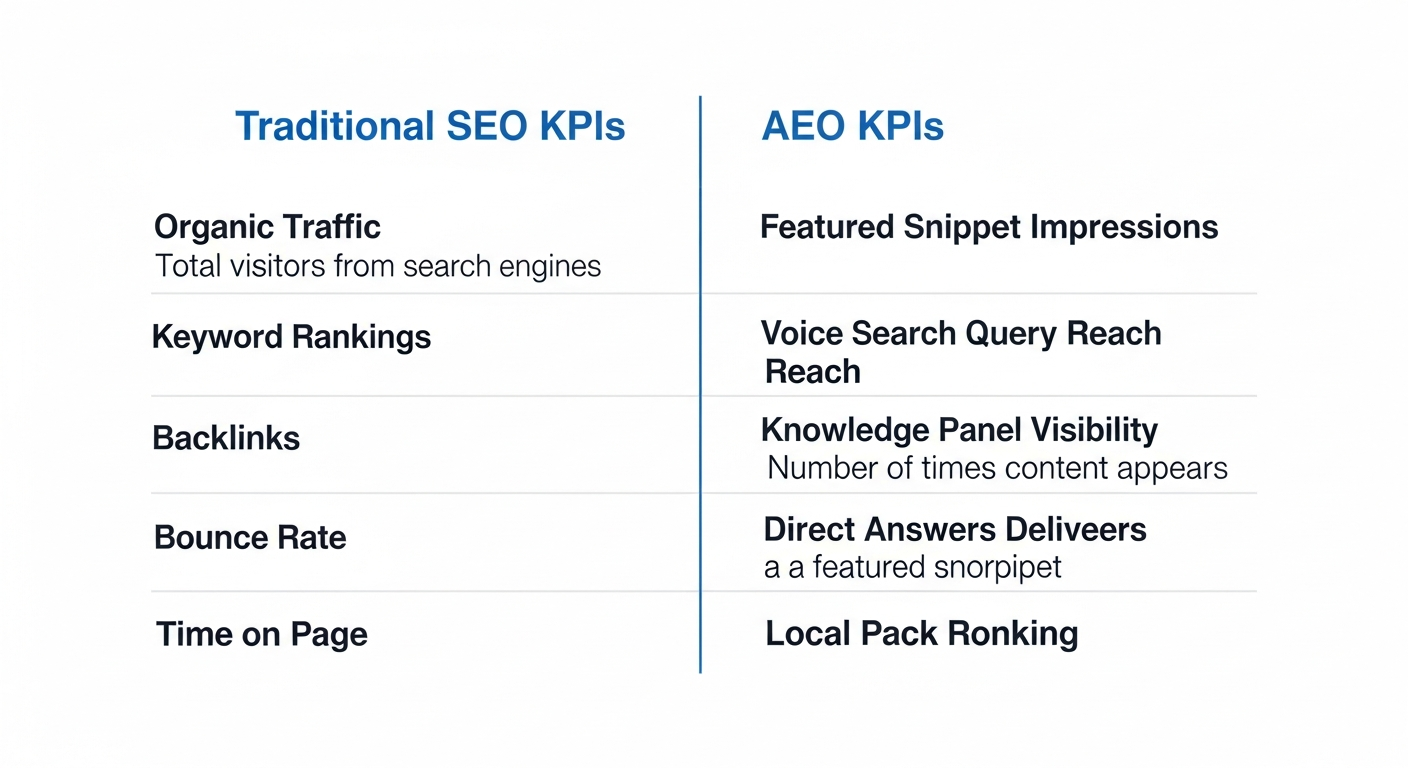
Traditional SEO tracking relies on keyword rankings and clicks, but AEO (Answer Engine Optimization) requires a different approach. Because AI models generate real-time, non-linear responses, tracking your brand’s presence involves monitoring both direct citations and the sentiment of the "advice" the AI provides to users.
Tools for Tracking AI Citations
Unlike Google Search Console, which provides clear data on clicks and impressions, AI engines are currently "black boxes" for many marketers. To get a clear picture of your visibility, you should utilize a mix of manual and automated tools:
- Manual Perplexity Pro and ChatGPT Plus Queries: Regularly audit your brand by asking conversational questions like "Who is the best plumber in [City]?" or "Which local HVAC company has the best warranty?" This helps you see if your business is being cited in the conversational flow.
- Google Alerts and Talkwalker: Since LLMs pull data from web indexes, monitoring new mentions of your brand across the web is crucial. If a high-authority blog mentions your services, that data is likely to be ingested by an AI model in its next update.
- Specialized AEO Tracking Software: Platforms like GeoRanker and BrightEdge have begun rolling out features specifically designed to track "Share of Voice" within generative AI environments. These tools help you see how often your brand appears in the "Sources" section of an AI response.
- Brandwatch: This tool is excellent for sentiment analysis across the web, providing insights into how the data being fed into LLMs might influence the AI’s "opinion" of your business.
Manual Verification and Sentiment Analysis
While automated tools provide the "what," manual verification provides the "why." It is essential to conduct regular hallucination checks. LLMs can occasionally "hallucinate" or misattribute services—for example, suggesting your roofing company also does electrical work when you do not.
To ensure accuracy, your team should analyze the sentiment of the AI’s response. Is the engine recommending you enthusiastically, or is it listing you as a secondary option? For a deeper dive into how these engines weigh your brand’s authority, see our comprehensive (https://www.example.com/geo-guide/).
Measuring Success (KPIs)
To prove the ROI of your AEO efforts, you must look beyond traditional organic traffic. Focus on these specific metrics to gauge your impact in AI engines:
- Citation Velocity: The frequency with which your brand or website is cited as a source in AI-generated answers over a set period.
- Direct Referrer Traffic: Monitor your analytics for traffic coming from "perplexity.ai," "openai.com," or "bing.com" (specifically from the Copilot interface).
- Sentiment Score: A qualitative assessment of whether the AI describes your business as a "top-rated" or "recommended" provider versus a neutral mention.
- Conversion Rate from AI Referrals: Users arriving from AI engines often have high intent; tracking the lead conversion rate of these specific users is vital for home service businesses.
Competitor Comparisons and Sponsored AI Placements
Winning the ‘Alternative To’ Query
LLMs are frequently used as digital advisors, helping homeowners find the best service provider among a sea of options. For local contractors, this often manifests in "Alternative to " or "Best roofing company near me" queries. To rank in these results, your brand must be associated with the same high-intent entities as your top competitors. AI models rely heavily on co-occurrence—if your business is consistently mentioned alongside industry leaders in local directories, news articles, and Answer Engine Optimization discussions, the AI is more likely to recommend you as a viable local alternative.
Comparison Pages and Buyer’s Guides
Creating dedicated comparison pages is a powerful way to control your brand’s narrative within AI outputs. However, you must prioritize data accuracy to prevent the LLM from generating "hallucinated" claims about your services or your competitor’s pricing. If the AI encounters conflicting or ambiguous information across the web, it may default to a generic or incorrect summary that can misrepresent your business.
To mitigate this risk, implement structured comparison tables with clear, definitive headers. These tables act as a "source of truth" for the AI, making it significantly easier for the LLM to extract "Pros and Cons" without misinterpreting the context. When your data is presented in a clean, tabular format, the AI is less likely to fill in gaps with its own (often inaccurate) assumptions, ensuring your competitive advantages are clearly understood.
Formatting tips for AI-friendly guides:
- Use H4 tags for each specific competitor or product being compared.
- Include a bulleted list of key features for every entry to simplify data ingestion.
- End each comparison section with a summary sentence (e.g., "Company X is best for emergency plumbing, while Company Y excels in high-end bathroom remodels").
- Reference third-party reviews and citations to provide the AI with a multidimensional view of your authority.
Paid Options and Partnerships
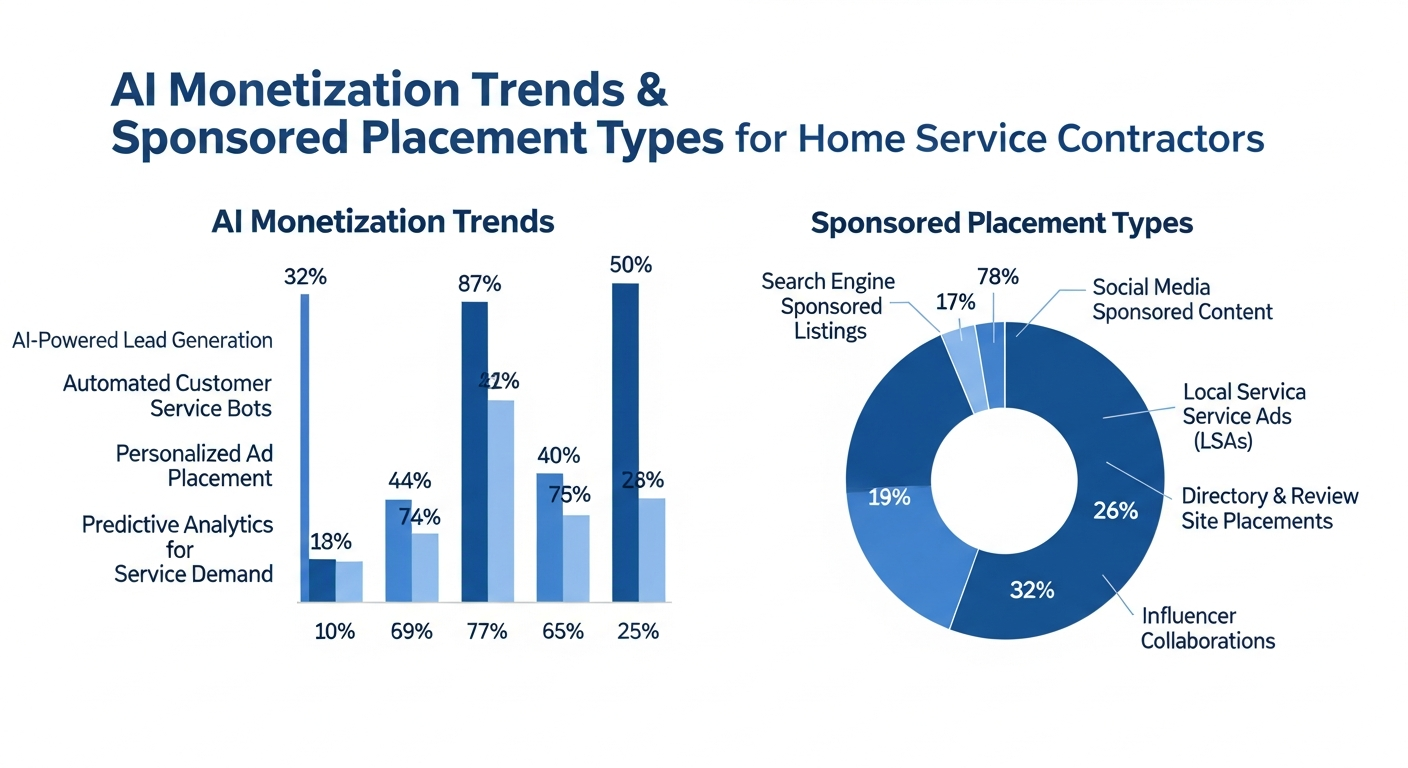
As the AI landscape matures, engines like Perplexity are shifting toward monetization models that mirror traditional search advertising but with a conversational twist. One notable development is the emergence of Perplexity’s "Sponsored Proactive" answers. These allow brands to pay for placement within the AI’s response, often appearing as suggested follow-up questions or featured citations that guide the user toward a specific service or brand.
Winning in this paid space requires a strategic intersection of technical SEO and paid media. Simply paying for a placement is insufficient; your underlying landing page must still meet the high readability and relevance standards required by the LLM. For home service businesses, this means ensuring your service pages are optimized for the specific "sponsored" queries you are targeting, creating a seamless transition from the AI’s proactive recommendation to your website’s conversion funnel.
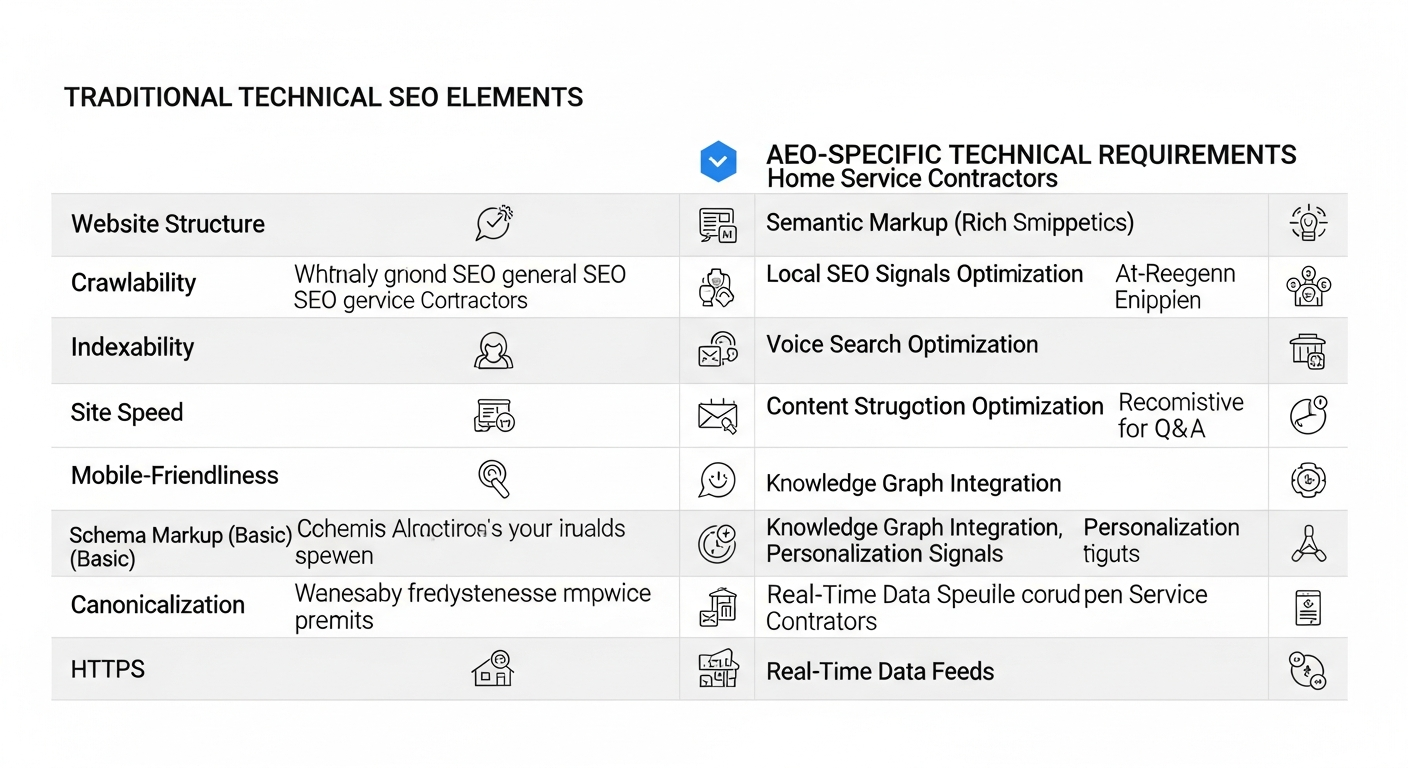
The Convergence of Technical SEO and AEO
Foundational Technical Health as an AI Prerequisite
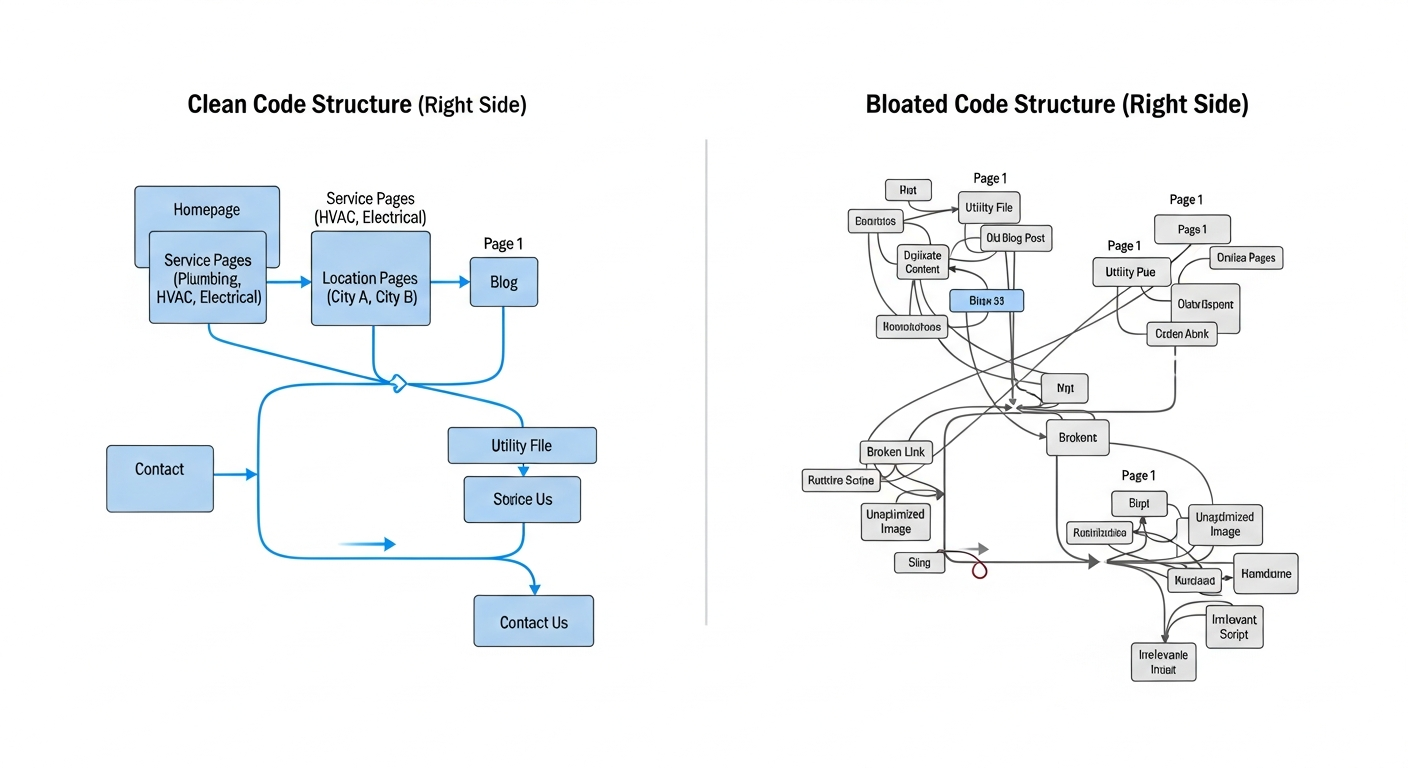
To rank in ChatGPT and Perplexity, your website must move beyond human-readable content and prioritize machine-readability. AI agents and LLM-based crawlers (such as GPTBot) require clean code and a streamlined DOM (Document Object Model) to parse information efficiently. A site burdened by excessive JavaScript bloat, messy CSS, or redundant HTML tags creates friction during the extraction process, often resulting in "hallucinations" or the AI skipping your site entirely in favor of a more accessible source.
A high-performance technical architecture is the baseline for all AEO efforts. This includes:
- Minimizing Render Blocking: Ensuring that the core content is visible in the initial HTML response rather than relying on heavy client-side rendering.
- Logical Header Hierarchy: Using H1-H4 tags not just for styling, but as a semantic map that guides AI scrapers through the page’s logic.
- Fast Crawl Budget Management: Reducing server response times so that AI bots can index your most critical pages without timing out.
Advanced AEO as an Extension of Technical SEO
While traditional SEO focuses on indexing pages for keyword relevance, Answer Engine Optimization (AEO) is an evolution that treats your website as a structured database. AEO is not a replacement for technical SEO; it is a specialized extension designed for Retrieval-Augmented Generation (RAG). To succeed, home service businesses must shift from simple metadata to complex Schema Markup (JSON-LD) that defines the relationships between entities—such as your services, service areas, and customer reviews.
By implementing advanced structured data, you provide the "connective tissue" that AI models use to verify facts. When a user asks, "Who is the most reliable plumber in Miami?" the AI looks for verified entity signals. If your technical foundation is sound, your AEO layer—consisting of entity mapping and semantic clustering—allows the AI to synthesize your information into a direct answer. This convergence ensures that your business is not just found, but is actively recommended as the definitive solution.
Frequently Asked Questions About AI Search Optimization
How long does it take for new content to appear in Perplexity citations?
Perplexity is known for its high citation velocity compared to traditional engines because it often crawls the web directly or utilizes extremely fresh search indexes. While timelines vary based on your site crawl frequency, new content typically appears in citations within a few hours to several days. Maintaining a clean XML sitemap and using indexing APIs can further accelerate this discovery process.
Can I use robots.txt to block AI but keep Google rankings?
You can selectively block AI crawlers by targeting their specific user agents in your robots.txt file. For instance, disallowing GPTBot or CCBot prevents those specific models from scraping your data for training while leaving Googlebot unaffected. This allows you to maintain your organic search rankings while exercising control over how AI models ingest your intellectual property.
Does having a high domain authority automatically mean I’ll rank in ChatGPT?
High domain authority provides a competitive edge but does not guarantee a spot in ChatGPT responses. These models prioritize content that is contextually relevant and formatted for easy extraction. A lower authority site that provides a concise, accurate answer to a specific natural language prompt often outranks a high authority page that is poorly structured for Retrieval-Augmented Generation.
What is the ‘TL;DR’ method for AI optimization?
The TL;DR method involves placing a concise summary or direct answer at the very beginning of a page or section. This answer first approach caters to the way LLMs scan for information, making it significantly easier for the engine to identify your content as the definitive source for a user’s query. It functions as a clear signal of relevance for automated extraction tools.
How do I handle incorrect or hallucinated information about my brand in AI results?
The most effective way to combat hallucinations is through source grounding and authoritative data signals. By implementing robust Schema.org markup and maintaining consistent brand facts across high authority directories, you provide the AI with a verifiable truth set. Clear, structured FAQ sections on your own domain serve as the primary reference point for correcting misinformation and ensuring your brand identity remains accurate.
Optimize Your Contractor Brand for AI Search
Ensuring your brand data is accurately parsed by LLMs requires a systematic review of your technical assets and content architecture. Download our AEO Checklist for Home Service Pros to audit your site readiness for ChatGPT and Perplexity citations, or partner with us to refine your home services marketing SEO strategy for the era of generative search.